
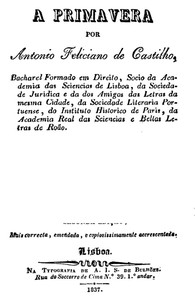
A Primavera by Antonio Feliciano de Castilho
Let's talk about A Primavera. Published in the first half of the 19th century, this book is a cornerstone of Portuguese Romanticism. But what is it, really? It's not a novel with a plot in the way we expect today. Instead, it's a long, meditative poem divided into sections, or 'cantos'. Castilho uses the framework of the seasons, starting with spring, as a way to explore a universe of ideas.
The Story
There isn't a traditional narrative with characters chasing a goal. The 'story' is the journey of perception and feeling. The poet acts as our guide, walking through a natural landscape bursting with the life of spring. He describes everything in vivid detail—the flowers, the streams, the morning light. But this isn't just description for its own sake. Each element sparks a reflection. A blooming rose might make him think about love and its thorns. The passing of a cloud could lead to thoughts on time and memory. The poem flows from these beautiful observations into deeper questions about beauty, art, God, and the human soul. It's less about what happens next, and more about what you feel and think as you observe the world alongside the poet.
Why You Should Read It
I'll be honest, if you need fast-paced action, look elsewhere. But if you're willing to slow down, this book is a gentle marvel. Castilho's love for the Portuguese language and landscape shines on every page. Reading it feels like stepping into a beautifully painted scene. His Romanticism isn't about wild, destructive passion; it's softer, more reflective. It's about finding the profound in the quiet and the everyday. I found it incredibly peaceful. It's a book that asks you to notice things—the way light changes, the specific name of a flower—and connects that noticing to bigger human experiences. It’s a masterclass in using nature as a mirror for our inner lives.
Final Verdict
This book is perfect for poetry lovers, for anyone interested in European Romanticism beyond the usual British and French names, or for readers who just want a quiet, thoughtful literary experience. It's also a fantastic pick if you're learning about Portuguese culture and history, as Castilho is a foundational figure. Approach it not as a story to be solved, but as a mood to be absorbed. Think of it as a long, restorative walk with a very eloquent and sensitive companion from the 1800s. You might just find it changes how you look at the next spring day.
This title is part of the public domain archive. Knowledge should be free and accessible.
Paul Garcia
2 years agoOne of the most comprehensive guides I've read this year.
Elizabeth Lopez
1 year agoThe layout is perfect for tablet and e-reader devices.
Elizabeth Jackson
1 year agoVery satisfied with the depth of this material.
Michael Perez
8 months agoHaving followed this topic for years, I can say that the case studies and practical examples provided add immense value. An excellent example of how quality digital books should be formatted.


Emily Taylor
4 months agoClear, concise, and incredibly informative.