
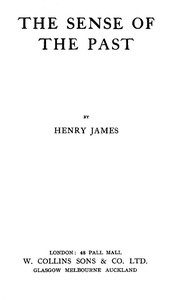
The Sense of the Past by Henry James
Henry James, the master of psychological nuance, left us with one last, fascinating puzzle when he died in 1916. The Sense of the Past is that puzzle—an unfinished novel that plays with time in a way that feels surprisingly modern.
The Story
The plot follows Ralph Pendrel, an American with a deep, almost obsessive, fascination with history. When he inherits a beautiful old house in London, he discovers a portrait of a namesake ancestor from a century before. The painting unnerves him; the subject’s gaze feels like an invitation. One night, in a quiet moment in a specific room of the house, the impossible happens. Ralph finds himself not just thinking about 1820, but living in it. He has swapped places with his ancestor. Now, he must navigate the complex social rules and romantic entanglements of Regency-era London, all while knowing a man from the future is living his 20th-century life. The tension comes from his dual role: he’s both an insider (because he looks like the ancestor everyone expects) and a complete outsider (because he doesn’t know the rules of their world).
Why You Should Read It
Don't go in expecting a slick time-travel adventure. This is a slow, deep dive into the psychology of displacement. James is less interested in the mechanics of the swap and utterly fascinated by what it does to a person’s mind. What happens when you get your greatest wish—to truly know the past—and find it’s a gilded cage? Ralph’s struggle isn’t with villains or monsters, but with manners, conversations, and his own growing sense of alienation. You feel his claustrophobia and his wonder. Reading the unfinished manuscript is its own unique experience. You get to see the gears of a great writer’s mind turning, building an incredible premise, even if the blueprint was never fully realized.
Final Verdict
This book is perfect for patient readers who love character-driven stories and don’t mind a bit of literary archaeology. If you enjoy stories about identity, the weight of history, or the quiet horror of being out of your own time, you’ll find a lot to love here. It’s not a beach read; it’s a book to savor in a quiet corner, preferably in an old house. Think of it as a captivating conversation with a brilliant writer that, heartbreakingly, got cut short—but what remains of that conversation is absolutely worth hearing.
This title is part of the public domain archive. Access is open to everyone around the world.
Joseph Lee
1 month agoGiven the current trends in this field, the way it challenges the status quo is both daring and well-supported. I'm glad I chose this over the other alternatives.
Kimberly Wilson
2 weeks agoOne of the most comprehensive guides I've read this year.
David Martin
1 month agoA must-have for graduate-level students in this discipline.
Kevin Taylor
7 months agoCitation worthy content.



David Smith
2 years agoOne of the most comprehensive guides I've read this year.